
From Fellowship to Violence
The Canterbury TalesThis flow tracks how companionship repeatedly deteriorates when appetite, pride, or rivalry overwhelms shared rules.
increasing Bearing strength in each event
 decreasing
Bearing strength in each eventdecreasingPilgrim Agreement
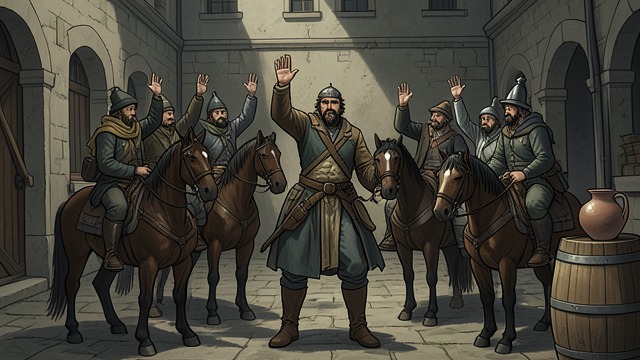
Pilgrim Agreement
Shared Rules
The company accepts Harry Bailly as governor and promises to follow his judgment. Their fellowship begins through explicit consent.
Latent Rivalry
The contest also ranks performances and promises a prize. Cooperation therefore contains competition from its first moment.
Cousins in Conflict
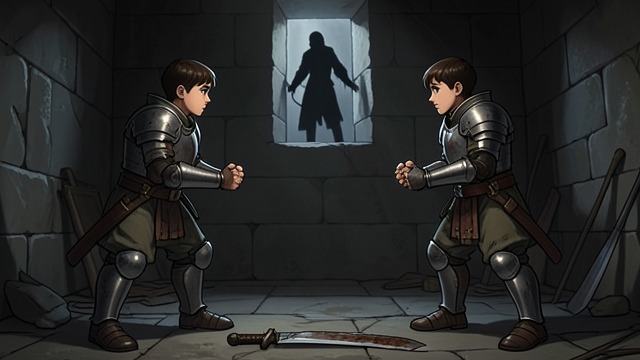
Cousins in Conflict
Oath Against Desire
Palamon and Arcite have promised mutual aid, but each claims Emily as his own. Their language shifts from brotherhood to legalistic accusation.
Violence as Proof
Because neither can possess Emily through ordinary means, combat becomes the test of priority. Love converts intimacy into hostility.
Rioters’ Conspiracy
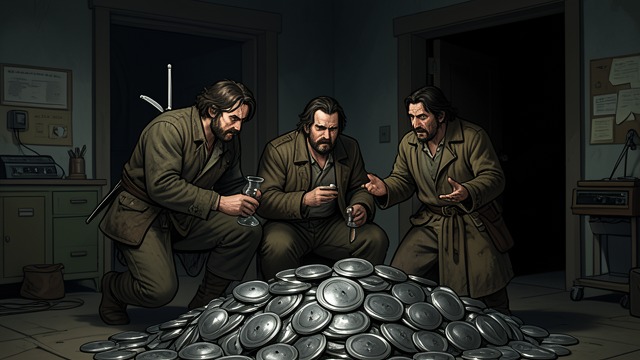
Rioters’ Conspiracy
Brotherhood Reversed
The Three Rioters swear loyalty, then immediately plan to murder one another. Their oath becomes evidence of hypocrisy rather than solidarity.
Appetite’s Rule
Gold replaces the stated enemy as the object of pursuit. The group disintegrates because possession makes cooperation intolerable.
Pardoner’s Quarrel
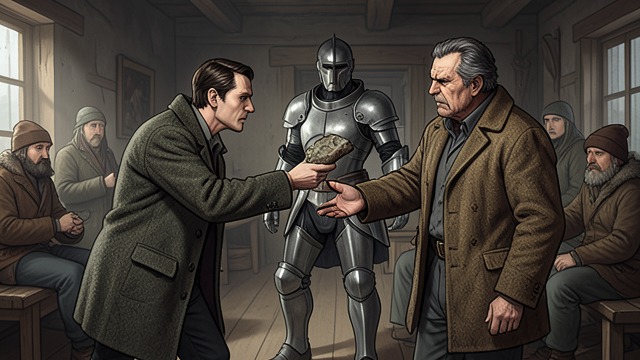
Pardoner’s Quarrel
Ritual Provocation
The Pardoner tries to turn the company into paying penitents. Harry Bailly refuses and exposes the physical basis of the relic performance.
Contained Disorder
The insult nearly breaks the social game, but The Knight restores courtesy. The episode shows fellowship surviving through mediation rather than harmony.
Fox’s Reversal
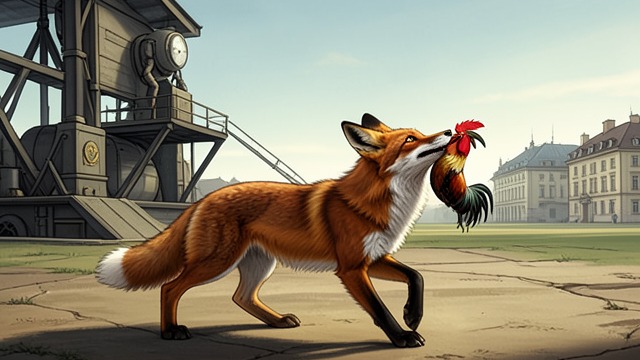
Fox’s Reversal
Predator’s Confidence
Russell assumes that possession of Chanticleer guarantees victory. His pride repeats the same error that made his capture possible.
Escape Through Counterplay
Chanticleer uses speech to provoke the fox into opening his jaws. The conflict ends when cunning changes sides.
The first night at The Tabard
After Emily appears in the garden
After finding the gold under the tree
After the Pardoner’s invitation to Harry Bailly
At the edge of the woodland
